- The Tech Buzz
- Posts
- Nvidia’s Trillion-Dollar Bet on Inference Hits Market Reality
Nvidia’s Trillion-Dollar Bet on Inference Hits Market Reality
GTC 2026, $1T Forecast, Iran Energy, Helium Crisis May Complicate it.

The Tech Buzz
March 17, 2026
IN PARTNERSHIP WITH
WHAT’S INSIDE:
Feature: Nvidia’s Trillion-Dollar Bet on Inference Hits Market Reality
Top Tech News: S&P +1.01% on AI-led rally; US allies avoid Hormuz coalition; Google/Amazon/OpenAI pact vs AI scams; China’s 7nm chip production
Company Watch: Nvidia $1T backlog; Tesla $25B Terafab AI-chip push; Meta $27B Nebius infra deal; Apple buys MotionVFX; Moonshot AI targets $18B; Frore hits $1.64B
Buzzy Tools: Nvidia Vera CPU; Google Stitch; Claude 1M-token context; GenCAD photo→CAD; GLM-5-Turbo; AWS+Visa agentic ; Robinhood Family Hub.
Buzzy Tech: BlueField-4 STX + DLSS 5; Shopify for shopping agents; World-model labs raise $1B+; “Robot Money” autonomous treasury; Britannica sues OpenAI;
Crypto: Strategy +22,337 BTC ($1.57B) to 761,068; Abra $750M SPAC; BlockFills Ch.11; $2K BTC-mining water heater; Privy DeFi yield vaults (Morpho/Steakhouse/Gauntlet).
IN PARTNERSHIP WITH RYSE
Pre-IPO A.I Smart Home Opportunity — Nasdaq Ticker $RYSS Reserved
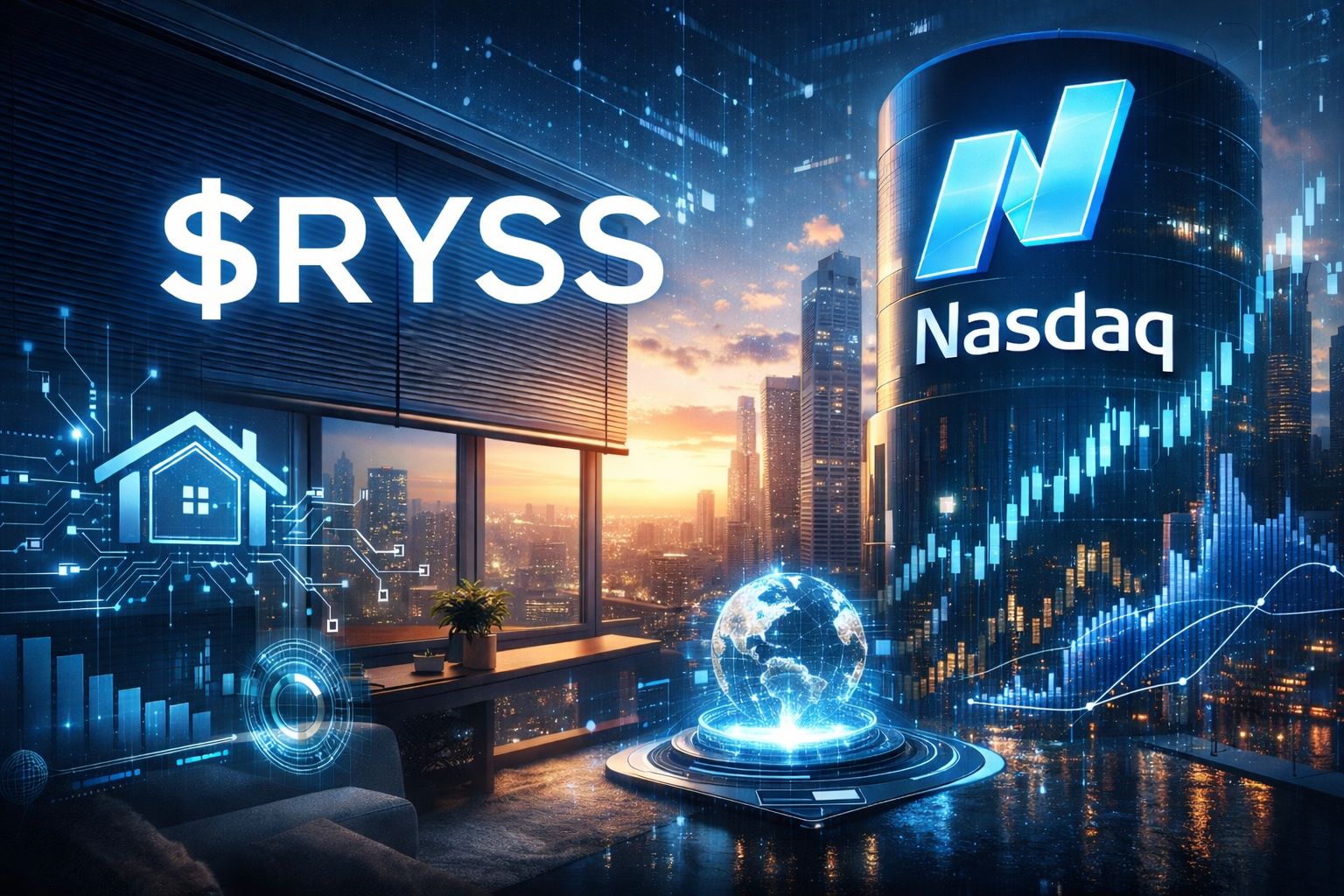
RYSE is building the A.I. layer for the smart home, starting at one of the most important control points: window coverings. Blinds and shades shape how natural light, heat, and comfort move through an entire space — yet over 90% remain manually controlled across homes, offices, and hotels.
The first wave of smart home leaders showed what’s possible. Google acquired Nest for $3.2 Billion. Amazon bought Ring for over $1 Billion. Each began with a single overlooked category. RYSE is following that path with window covering automation.
RYSE has earned over $15 million in revenue, holds 10 patents, and is expanding through major retail and B2B channels, including sales in 100+ Best Buy stores and deployments with Fairmont Hotel.
The company has reserved the Nasdaq ticker $RYSS. This may be their final public round before they shift towards institutional capital ahead of any potential exit or liquidity.

Top Technology News
Oil Shock — The U.S. struggles to counter the Iran war's oil impact as crude tops $100. Oil prices dropped 3% Monday as Iran allowed selected vessels to navigate Hormuz strait, and on high U.S. output, and the IEA reserve releases.
Central Banks Meet — G4 central banks met as oil prices stir inflation fears. The Federal, ECB, BoE, and BoJ face policy shifts. Traders now price a Fed rate hike at ~25% chance within the year.
Wall Street Surges on AI Stocks — Wall Street rallied as AI stocks climbed, with Meta up on layoff news. The S&P 500 gained 1.01% while lower oil prices gave relief.
Allies Pass on Coalition — US allies including the EU resist military engagement in the Strait of Hormuz crisis, citing risks & urging de-escalation over action.
Tech Giants vs Scams — Eleven firms including Google, Amazon, and OpenAI sign accord to share threat intelligence to combat online AI scams amid $16B 2024 losses.
China's 7nm Chip Breakthrough — Hua Hong Group will produce 7-nanometer chips by year-end, partnering with Huawei and local suppliers to boost sovereignty.
Nvidia’s Trillion-Dollar Bet on Inference
Tech Buzz Editorial Feature
Jensen Huang Doubles Down While Supply Chains Crumble
Jensen Huang stood before 18,000 developers at GTC 2026 on Monday and raised his bet on the inference age. The Nvidia CEO had previously forecast $500B in AI chip revenue through 2026. Now he's calling at least $1T through 2027. That means another $500B for 2027 alone, nearly four times the $130B Nvidia reported in fiscal 2025.
Wall Street ate it up. The stock jumped. Analysts scrambled to revise models. Nobody seemed to notice that the entire forecast assumes Taiwan stays in the U.S. sphere, and that helium keeps flowing, and the Strait of Hormuz reopens soon.
The Promise: Inference Everywhere, Forever
Huang's pitch centers on what he calls "the inference inflection." Training AI models was Act One, dominated by Nvidia's datacenter GPUs. Inference is Act Two, where those models run continuously in production across millions of deployments. Every AI agent answering customer service calls, every autonomous vehicle navigating city streets, every robot assembling products needs constant compute power.
To capture this market, Nvidia unveiled the Vera CPU, a purpose-built processor for agentic AI claiming 2x efficiency and 50% faster performance than traditional rack-scale chips. The company launched NemoClaw, an enterprise AI agent platform addressing the security failures that kept OpenClaw out of corporate environments. BlueField-4 STX targets the storage bottleneck created when AI agents need to retrieve context from massive knowledge bases in milliseconds.
The DLSS 5 graphics announcement extends generative AI beyond gaming into film production, industrial design, and architectural visualization. Partnerships with Siemens, Dassault Systèmes, TSMC, Samsung, and Mercedes-Benz embed Nvidia infrastructure into manufacturing workflows worth trillions annually.
Every announcement follows the same playbook: identify the next AI deployment bottleneck, own the solution before customers know they need it, lock in the ecosystem. It worked with CUDA for two decades. Huang's betting it works again for inference.
The Math Meets A More Complex Global Situation
Here's what has to go right for that $1T to materialize. TSMC must maintain 90%+ fab utilization while producing cutting-edge 3nm and 5nm wafers for Blackwell and Rubin chips. Enterprise AI spending must accelerate, not plateau, despite unclear ROI on many deployments. Energy costs need to stay stable. Supply chains need zero major disruptions.
Now here's what's actually happening.
The Strait of Hormuz remains closed as the Iran war escalates. That's 20-30% of global oil stuck in the Persian Gulf. Qatar, which supplies a quarter of the world's helium and ships it through Hormuz, can't get product to market. Helium prices already 135% higher than 2019 could spike 300-500% if the strait stays blocked.
Why helium matters: advanced semiconductor fabrication is helium-intensive. The 3nm and 5nm process nodes TSMC uses for Nvidia chips require more helium per wafer than older technologies. TSMC, Samsung, and every advanced fab depend on steady helium supply for cooling equipment and creating inert atmospheres. No substitutes exist. Strategic reserves buy months, not years.
Meanwhile, China's Hua Hong Group just achieved 7nm chip manufacturing capability, Reuters reported this week. That's China's second-largest chipmaker reaching advanced nodes despite US equipment sanctions. Huawei collaborated on the technology. Biren, a blacklisted Chinese GPU designer, is already taping out chips on the new process. Beijing's pushing domestic alternatives hard. Nvidia's China revenue, already constrained by export controls, faces homegrown competition that no longer lags by five years.
Taiwan remains the single point of failure. 90% of sub-10nm chips come from TSMC facilities on an island China considers a renegade province. Geopolitical tensions spike as Beijing watches how the West responds to Middle East chaos.
The Playbook: Position for Growth, Hedge the Physics
For investors, the trade is asymmetric. Nvidia's ecosystem lock-in is real. No competitor offers an end-to-end stack from chips to storage to security to software. Enterprise IT inertia favors incumbents. The CUDA moat remains formidable.
But $1T assumes frictionless execution in a world growing more friction by the week. A realistic haircut is 30-40%. That still means $600-700B through 2027, massive growth from current levels, just not the moonshot Jensen's selling.
Watch leading indicators, not announcements. TSMC capacity utilization rates signal real demand better than press releases. Helium spot prices on global markets reveal supply stress before it hits production. Enterprise AI deployment metrics, not pilot programs, show whether inference spending materializes at scale. Chinese chip production volumes from Hua Hong and SMIC indicate how fast the addressable market fragments.
For allocators building 2025-2027 positions, the Nvidia story remains compelling. AI infrastructure spending is growing. Inference computing creates genuine new workloads. Vertical integration from gaming GPUs to datacenter CPUs to enterprise platforms diversifies revenue streams.
Just remember that supply chains don't care about your TAM slide. Taiwan doesn't stabilize because your model needs it to. Helium doesn't materialize because chip fabs require it. Oil tankers don't teleport around closed straits because your discounted cash flow assumes they do.
The $1T forecast is both sales pitch and strategic weapon. By declaring the number publicly, Nvidia forces cloud providers to budget for it, startups to pitch against it, enterprises to plan around it. The prophecy starts fulfilling itself through coordinated ecosystem behavior.
Until it meets physics. Then we find out whether Jensen has built a cathedral or a house of cards.
Companies To Watch
Latest deals and trending companies
NVIDIA's Backlog — Announced $1T revenue order backlog through 2027, potentially doubling ARR. It also unveiled new CPU and AI systems leveraging Groq's LPU tech.
Tesla Terafab Chip Fab — Elon announced $25B Terafab Project launching in seven days. Will produce 100-200B custom AI and memory chips annually for FSD, Grok.
XAI Macrohard — Macrohard project faced leadership changes and data collection pause. Tesla's Digital Optimus is advancing. Now Musk announced the two are actually a joint xAI-Tesla project.
Meta x Nebius — Meta signed a $27B deal for cloud AI infrastructure, part of a $135B AI spending plan & may slash 20% of its workforce to fund the spending.
Apple Acquires MotionVFX — Acquired MotionVFX, leader in video editing tools for Final Cut Pro to enhance Apple's services competing with Adobe Premiere Pro.
Moonshot AI Eyes $18B — Chinese startup aims to raise $1B, boosting valuation to $18B from $4.3B in 2025. Kimi sales have outstripped last year's total revenue.
Frore Hits Unicorn Status — Achieved $1.64B valuation after raising $143M, transitioning to liquid cooling for AI chips. Influenced by Jensen Huang.
Axiom Math Raises $200M — Silicon Valley startup, valued at $1.6B, develops AI systems to verify computer code. Raised $200M to enhance software quality.
Buzzy Tools & Tech
The Latest Trending Tools & Cutting Edge Technology Developments
Buzzy Tools
Buzzy Tools To Watch and Try Today
NVIDIA Vera CPU — 2x efficiency for agentic AI and reinforcement learning
Google Stitch — 3D design tool with voice controls, agent for React apps
Claude Limit Boost — Anthropic doubled usage limits, adds 1M-token context
AirPods Max 2 — H2 chip enables adaptive sound, advanced noise cancellation
GenCAD — MIT AI model converts photos to editable CAD programs
GLM-5-Turbo API — Optimized for precise OpenClaw tasks, improved instruction
AWS & Visa AI Payments — AI tools for scalable agentic commerce payments
Robinhood Family Hub — Custodial accounts for family wealth management
Buzzy Technology
Buzzy Tech Discoveries and Breakthroughs Trending Today
NVIDIA BlueField-4 STX — Modular architecture optimizes AI storage. + DLSS 5 AI graphics boost gaming, film, design frame rates and photorealism.
Shopify Preps for AI Agents — AI shopping agents to revolutionize e-commerce
World Models Raise $1B+ — AMI Labs and World Labs secure over $1B
Robot Money Protocol — AI treasury protocol manages idle capital autonomously
AI mRNA Dog Vaccine — Custom vaccine created with ChatGPT, AlphaFold
Human-Made Certification Push — Efforts for universal AI-free certification
Britannica Sues OpenAI — Legal action questions AI training data practices
Pokémon GO Powers Delivery Bots — Niantic's players aid robot navigation
Cryptocurrency News
The Latest News in Crypto & Blockchain
SStrategy Buys 22K More BTC — Strategy acquired 22,337 BTC for $1.57B, boosting holdings to 761,068 BTC valued at $56B.
Abra Goes Public via SPAC — Abra plans public debut through merger with New Providence Acquisition Corp. III, valuing it at $750M.
BlockFills Files Chapter 11 — BlockFills filed for Chapter 11 with assets of $50M-$100M against liabilities of $100M-$500M.
Superheat's Bitcoin Water Heater — Superheat unveiled a $2,000 electric water heater doubling as a Bitcoin mining rig with built-in ASIC miners.
Privy DeFi Earnings — Privy enables users to earn on balances by connecting apps to curated DeFi vaults via API. Using Morpho, SteakhouseFi, Gauntlet infrastructure.
Follow Us On Social Media
Instagram: https://www.instagram.com/thetechbuzz.ig/
