- The Tech Buzz
- Posts
- How AI Changed Chess Forever—for the Better
How AI Changed Chess Forever—for the Better
Stocks rip on Nvidia/AI; US-China discuss AI guardrails; US okays limited H200 China sales; Pentagon adopts Anthropic “Mythos” cyber patch

The Tech Buzz
May 15, 2026
IN PARTNERSHIP WITH

WHAT’S INSIDE:
Feature: How AI Changed Chess Forever—for the Better
Top Tech News: Stocks rip on Nvidia/AI; US-China discuss AI guardrails; US okays limited H200 China sales; Pentagon adopts Anthropic “Mythos” cyber patch
Company Watch: Modal targets $4.5B; Cerebras IPO +70%; Google+SpaceX eye orbital data centers; VoltaGrid +$1B; Recursive raises $650M; Clio hits $500M ARR
Buzzy Tools: WWDC: Siri overhaul + 3rd‑party models; agentic coding stack heats up; Notion launches agent platform; Poppy proactive assistant; Clawdmeter tracks Claude
Buzzy Tech: Meta AI monitoring backlash; solid-state lithium scales (500 MWh→1 GWh); $10M quantum-bio push; new H2-splitting catalyst; microplastic sensor
Crypto: CLARITY Act advances; tokenized Anthropic/OpenAI “pre-stocks” plunge; CME+Nasdaq crypto index futures (Jun 8); JPM tokenized MMF filing; USBD + NUVA
IN PARTNERSHIP WITH LLAMAINDEX
Turn messy PDFs into AI-ready data
Extracting data from messy PDFs shouldn’t feel like an infinite while (true) loop of regex patches. 🦙 LlamaParse is the leading agentic document parsing engine built specifically for AI apps and workflows, empowering your team to reliably extract complex tables, charts, and nested structures accurately at scale.
LlamaParse turns unreadable files into structured, LLM-ready data across industries:
Finance: Automate OCR for 10-Ks and statements, speeding up financial data extraction by up to 40%.
Insurance: Reduce manual claims entry by 85% by accurately parsing dense, complex policy schedules.
Engineering: Seamlessly extract schematics from 100+ page technical manuals to fuel precision QA bots. Last year, Jeppesen (a Boeing Company) saved ~2,000 engineering hours using unified LlamaIndex workflows.
Give your Agents the exact context they need with LlamaParse.

Top Technology News
Markets Hit High — S&P 500, Nasdaq futures rise to new highs as Nvidia hits $5.5T on AI optimism with semiconductor stocks leading broader rally.
US-China AI Talks — US-China discuss AI guardrails to safeguard most powerful models as Treasury Secretary Bessent signals cooperation on AI safety standards.
US Clears Chips — US clears H200 chip sales to 10 Chinese firms as Nvidia CEO seeks breakthrough in trade restrictions amid AI competition.
Pentagon Mythos — Pentagon adopts Anthropic Mythos AI as a patch to bolster cybersecurity but claims it still intends to end partnership eventually.
Apple-OpenAI Split — Apple-OpenAI partnership frays as OpenAI considers suing Apple, explores alternatives to ChatGPT in iOS. Also: Musk-Altman Trial in closing.
China AI Worker — Chinese court orders compensation for worker replaced by AI setting precedent for automation labor disputes.
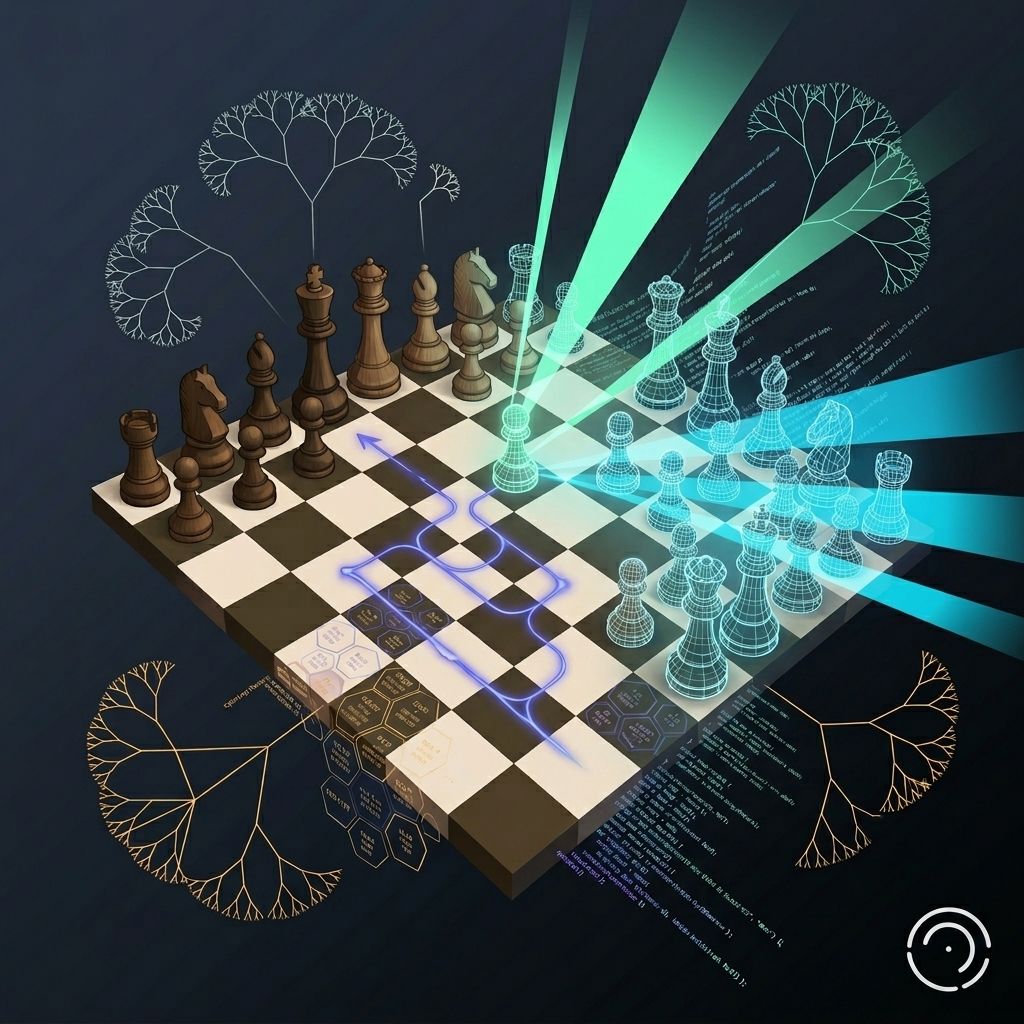
How AI Changed Chess Forever—for the Better
By: Sandeep Krishnamurthy, Singelyn Family Dean of the College of Business Administration at Cal Poly Pomona
Sam Altman of OpenAI and Dario Amodei of Anthropic are playing a 4-D chess game in the mad rush to their respective IPOs. Every week, it seems like they keep raising the stakes. One day, it is about creating greater physical intelligence through robots (OpenAI) and the next week, it is about Anthropic launching an enterprise-level company entirely run by agents. Will these promises play out? Who knows?
What this inspires me to do is look at the real world of chess. Many of the doomsday scenarios we talk about today have already been part of the game of professional chess for many years. As such, this allows us to see how AI could evolve into business, government and society.
Understanding how AI has changed one of the peak human experiences allows us to imagine where we are headed. Spoiler: generally speaking, my view is that AI has been integrated into the world of chess beautifully through support for player training, imaginative new formats and so much more.
Remember Deep Blue?
There is a long history of how "man vs. machine" conversations at a societal level have commenced with chess. Many readers will remember the classic fight between Gary Kasparov and Deep Blue. This was widely seen as the first crossing of a basic frontier: a machine (designed by IBM) outperforming not a pedestrian club-level chess player, but the best in the world.
One of the notable advancements was Google's Alpha Zero. IBM's Deep Blue was built on a database of previous games, a finite solution for a finite problem space. In direct contrast, Alpha Zero was simply provided with information about the rules of chess. It then proceeded to learn and having learned, is now in a position to beat every super Grandmaster in the world. This is a staggering accomplishment. In addition to chess, Alpha Zero mastered the game, Go. So complete was its domination in the world of Go that the human champion simply decided to retire rather than continue to lose.
Consider these facts:
Every serious chess player uses an engine to train to get better. However, they continue to work with human coaches as well. For the world championship, for instance, a player might have a whole team of human chess players who provide different aspects of expertise: opening theory, style of play etc.
The top chess engines outrank the best human chess player by nearly 800 elo points. This is the existential worry that a lot of people have: that AI will become measurably better than the best human players. We already have this in spades in chess.
It is a fait accompli that engines can help human players get better and that humans will never outperform engines. Instead, it is about recognizing that this is a separate artificial intelligence entirely available to us.
Today, there is a separate competition for chess engines. Each chess engine has its own algorithm and the competition pits them against each other. Stockfish has been a consistent winner with others with fancy names like Komodo and Leela hold their own.
Engines, Bots and Everything Else in Between
The best example of autonomous learning is Chess.com's Puzzle Rush. Puzzle Rush is an autonomous learning system where an individual interacts with an algorithm to become better at chess. The participant is first provided a simple puzzle. Based on the performance on the simple puzzle, more difficult puzzles are provided. The game ends when the player makes three mistakes: "three strikes and you are out."
There are now a plethora of chess bots. Each bot is based on a human player and draws from the database of games of that player. One could challenge oneself against a particular chess bot at any time.
How the Game Changed
My favorite American chess player, Hikaru Nakamura has said: "We have brains, we should probably use them," advising players not to sacrifice long-term cognitive skills for short-term efficiency gains. Hikaru Nakamura has repeatedly discussed how opening preparation, novelty discovery, and position evaluation are now deeply engine-driven. This has transformed chess from purely human strategic combat into a hybrid intelligence environment.
One of the recurring themes around modern chess is that engines often produce moves humans initially regard as absurd: quiet positional sacrifices, long-term compensation ideas, anti-classical maneuvers, highly dynamic king walks. Humans then absorb these ideas and expand their own conception of the game.
This is crucial: AI did not eliminate creativity. It changed the frontier of creativity. In chess commentaries, it is quite common to make observations such as "that's an engine move", "she is playing like an engine" or "there's no way that sacrifice could come from a human". The chess world has expanded to include the role of engines.
The most significant change to the world of chess has been the growth of freestyle (this is also called Chess 960 since there are 960 possible patterns for back row pieces). In this format, rather than the standard positions pieces occupy, both players are provided a random starting configuration. This format has proven to be energizing for the highest level of grandmasters since it underemphasizes prior calculation and creates more opportunities for stunning human intuition.
Takeaways for Technology Leaders
The deeper lesson for technology CEOs is not that AI will "replace humans." Gukesh Dommaraju remains the world chess champion and Magnus Carlsen is demonstrably the best chess player in the world. The chess world moved beyond that debate years ago. The real transformation came when the ecosystem reorganized itself around machine superiority. That is precisely what is now happening in business, and leaders like Sam Altman and Dario Amodei understand this intuitively.
The first leadership lesson is that technological superiority changes the role of leadership rather than eliminating it. In chess, the existence of engines stronger than humans did not destroy chess. Instead, it changed what it meant to be a strong chess player. Today's grandmasters are not simply calculators. They are curators, interpreters, strategists, and synthesizers of machine-generated insight. CEOs will increasingly lead organizations where AI systems outperform humans in forecasting, analysis, coding, optimization, and even tactical decision-making. Leaders who merely process information will become obsolete. Leaders who frame problems, define ethics, allocate trust, create culture, and interpret ambiguity will become more valuable than ever.
The second lesson is that every major AI advance changes competitive tempo. Deep Blue defeating Kasparov was symbolic. AlphaZero was existential. The next generation of firms will not merely automate existing workflows. They will discover entirely new pathways to value creation that human organizations would never have imagined. This is why the current AI race feels unstable.
The third lesson is that human expertise does not disappear after machine dominance—it becomes amplified through collaboration. Every serious chess player now trains with engines. Yet human coaches remain indispensable because development still requires emotional calibration, motivation, interpretation, creativity, and identity formation. The same hybrid model will emerge across industries. Elite performers will be those who can orchestrate systems of intelligence: humans, agents, models, data streams, and autonomous workflows working in concert.
Finally, chess teaches us something profound about human worth. Even though engines are vastly superior players, humans still watch human chess. We still admire courage, creativity, intuition, psychological resilience, and style. Magnus Carlsen matters not because he is stronger than Stockfish, but because he is human. As AI systems become economically dominant, scarcity may shift away from computation and toward authenticity, judgment, and human connection.
The CEOs who thrive in this next era will not simply build better models. They will understand a deeper truth: once intelligence becomes abundant, humanity itself becomes the differentiator.
Companies To Watch
Latest deals and trending companies
Open Deal
Modal $4.5B — Five-year-old startup offering Nvidia GPU rentals, AI-agent sandbox seeks $150-$250M at valuation with revenue growing five-fold to $300M backed by Accel, Redpoint.
Big Movers
Cerebras IPO — AI chip leader stock surges nearly 70% in the biggest IPO of 2026 sending the company’s market capitalization to almost $70B. $20B OpenAI contract.
Google-SpaceX Orbital — Discuss launching orbital data centers to reduce AI compute costs via Project Suncatcher. Prototypes by 2027 ahead of SpaceX IPO.
VoltaGrid $1B — Blackstone, Halliburton invest in energy solutions company valuing it over $10B including $775M capital injection, $225M share purchase targeting $1.1B EBITDA by 2028.
Recursive Super AI — Stealth startup by ex-leaders from Meta AI, Google DeepMind, OpenAI raised $650M at $4.65B valuation backed by GV, Greycroft, Nvidia, AMD targeting self-improving AI.
Clio $500M ARR — Legal tech company achieves $500M ARR by integrating AI as competitors Harvey, Legora report rapid growth while Anthropic enhances Claude with legal features.
Rivian Robotics — Rivian CEO robotics spinoff secured $400M funding positioning as notable emerging player in industry signaling rapid growth.
Buzzy Tools & Tech
The Latest Trending Tools & Cutting Edge Technology Developments
Buzzy Tools
Buzzy Tools To Watch and Try Today
Apple WWDC 2026 — Major Siri overhaul with AI capabilities, 3rd-party models
Coder Agents — Snyk-Claude partnership, Opsera-Cursor integration for coding
Notion Platform — New Developer Platform enables AI agents, custom workflows
Poppy Assistant — Consolidates data into one dashboard with proactive AI
Clawdmeter — Tiny desktop widget tracks Claude Code usage stats, costs real-time.
Buzzy Technology
Buzzy Tech Discoveries and Breakthroughs Trending Today
Google REPLIQA — Funds quantum-AI research for biological, medical studies
Lithium Battery — Pure lithium solid-state achieves 500 MWh capacity
MicroSparc Chip — Casimir Inc. chip harvests power from quantum vacuum
Hydrogen Split — WashU team creates phosphide catalyst for water splitting
Microplastic Sensor — New sensor detects microplastics in water, foods
Cryptocurrency News
The Latest News in Crypto & Blockchain
[Open Deal] Feed the Children Partners with WYDE's $EAT Token — FTC becomes exclusive partner for WYDE's $EAT hunger token. 944 holders funded 20,000 meals while token surged 10,000%, with 25% of trading fees auto-funding this verified 501(c)(3).
CLARITY Advances — Senate Banking advanced the act to regulate digital asset intermediaries under FinCEN introducing stablecoin reserves, DeFi rules.
PreStocks Plunge — Anthropic, OpenAI PreStocks on Solana fell sharply after warnings against unauthorized equity transfers with Anthropic dropping 38% to $879, OpenAI plunging 46% to $1,080.
CME-Nasdaq Futures — CME Group, Nasdaq debut Nasdaq CME Crypto Index futures June 8 offering micro, large contracts for top seven crypto assets.
JPMorgan Tokenized — Files for tokenized money market fund aimed at stablecoin issuers marking major TradFi move into blockchain-based products.
Boundary USBD — Boundary Labs launches USBD, verifiable institutional stablecoin on Eth backed by $2M Galaxy Ventures pre-seed. Aim for $100M TVL.
NUVA Ethereum — Animoca Brands-backed NUVA launched Ethereum marketplace linking $19B tokenized real-world assets from Figure.
Follow Us On Social Media
Instagram: https://www.instagram.com/thetechbuzz.ig/
